
Last updated September 25, 2026
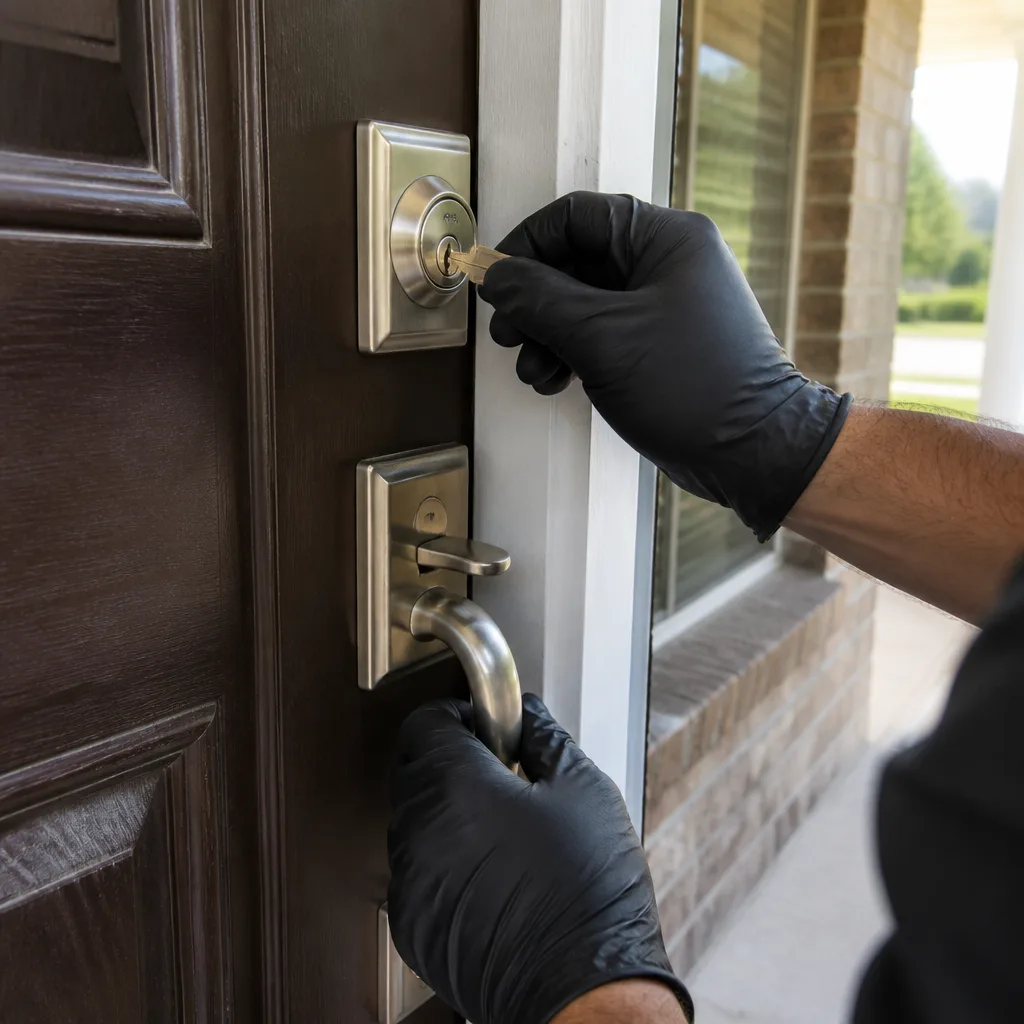
Non-destructive entry first, always - and we re-key Schlage, Kwikset, and Baldwin locks on the spot while you watch
You get a price before we start. It does not change when we arrive. No surprises.
 Before
 After
AfterLocksmith Warning Signs: A Katy Homeowner’s Reference Guide
The FTC first published its locksmith fraud alert in 2007. Eighteen years later, the same script still empties wallets in Katy. Low phone quote, unmarked van, price triples at the door, technician pressures you to decide before you can think. It works because most homeowners don’t recognize the pattern until they’re standing on their own doorstep with a stranger holding their lock. In Katy, where new construction in Cane Island and Tamarron mixes with older homes in Old Katy, the scam adapts to whatever door it finds. This guide maps every warning sign we’ve documented since 2002, so you can end the call before the van ever leaves the shop. For a broader overview, see The Complete Guide to Locksmith in Katy.
Quick Answer
Locksmith scams in Katy follow five visible warning signs: a vague or suspiciously low phone quote, an unmarked vehicle, refusal to show a Texas DPS locksmith license, insistence that drilling is the only option, and price changes at the door justified with “unexpected complications.” A legitimate locksmith quotes a firm price before dispatch, arrives in a marked vehicle with license in hand, and explains every option in writing.
Table of Contents

- The Phone-Quote Trap: What a Real Quote Sounds Like
- Van, Invoice, and ID: The Three Things Every Legitimate Locksmith Shows
- The “Drill Is the Only Option” Claim: Fact or Revenue Tactic?
- Price-Change Mechanics at the Door: The Exact Language Scammers Use
- How to Use the Texas DPS License Lookup in Real Time
- Katy-Specific Risk Factors: New Construction, Older Homes, and HOAs
- The Three Words That End Most Scams
- What a Legitimate Service Call Looks Like From Start to Finish
BeforeAfterThe Phone-Quote Trap: What a Real Quote Sounds Like
The scam starts with a number that sounds too good to refuse. In Katy, we’ve heard customers report phone quotes of $19, $29, or $49 for an emergency lockout. The dispatcher takes the address, promises someone in 15 minutes, and hangs up before explaining what that price actually covers.
Here’s what happens next. The technician arrives and announces that the $29 was “just the service call” or “the base fee before we see what we’re dealing with.” The actual price to open the door is now $180, $250, or higher. The customer is already inconvenienced, possibly standing outside in July heat or a January cold front, and the technician knows it.
A legitimate quote sounds different. When you call Novak Lock & Security Katy home, the dispatcher asks specific questions: what type of lock, how many locks, the address, and whether it’s an emergency or scheduled appointment. Then they quote a firm range or exact price. For a standard residential lockout in Katy, that range is typically $85-$150 depending on time of day and location. For a rekey of a single cylinder, expect $25-$45 per lock plus a trip charge. The price is written on the work order before the technician leaves the shop.
Red flags in a phone quote:
- Any quote under $50 for emergency service in the Katy market
- Refusal to give a maximum price or firm range
- Language like “starting at” or “as low as” without explanation of what drives the final number
- Dispatcher cannot or will not describe what the quoted price includes
- Pressure to provide address before receiving any pricing information
Haven Standard Clause 1: the price on the phone is the price on the invoice. We’ve operated under this rule since 2002. A technician who changes the price at the door is contractually prohibited from completing the job. That prohibition exists because we have documented what happens when price changes are permitted: the average invoice increases 340% over the phone quote, per FTC complaint data.
Van, Invoice, and ID: The Three Things Every Legitimate Locksmith Shows
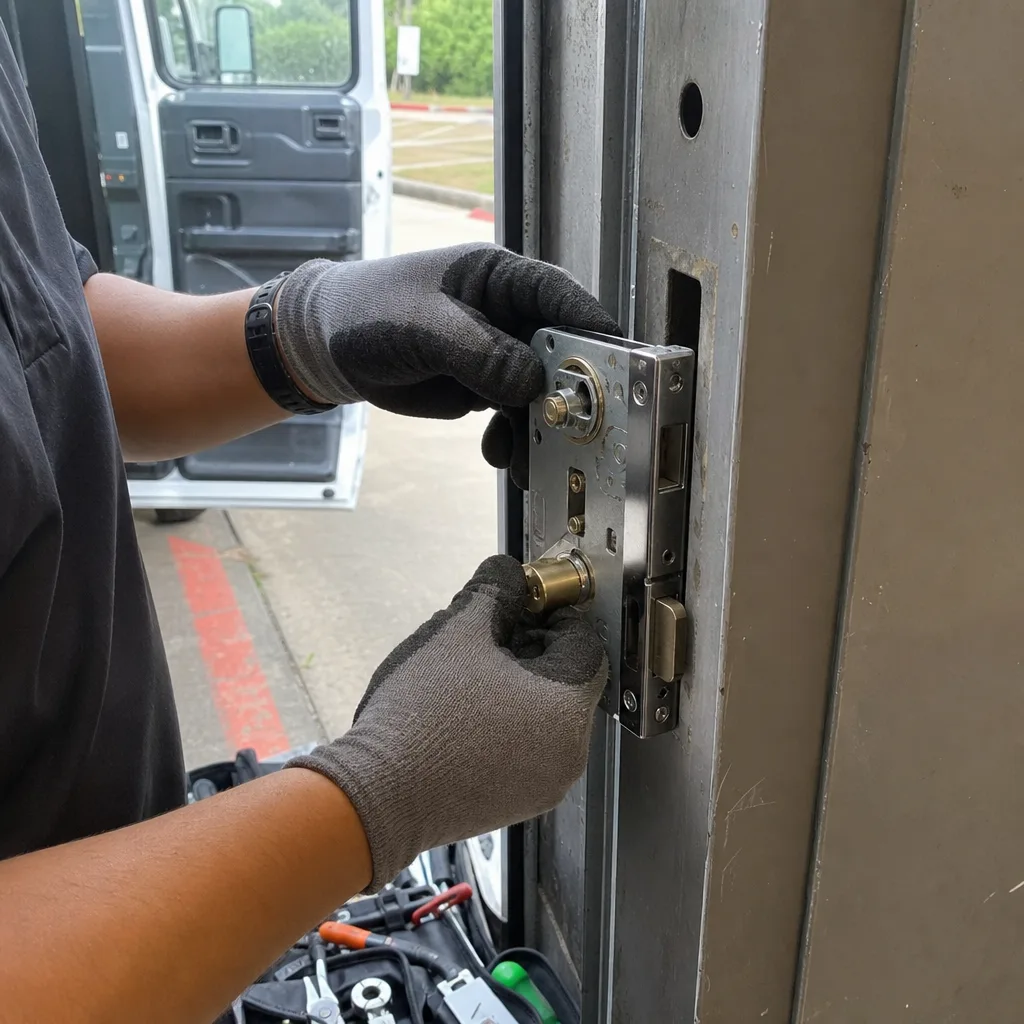
In 2007, the FTC noted that fraudulent locksmiths “often arrive in unmarked vehicles and refuse to show identification.” The pattern hasn’t changed. In Katy, we’ve had customers describe technicians arriving in personal vehicles with magnetic signs that peel off, or in rental trucks with no business name at all.
A legitimate locksmith in Texas displays three things before touching your lock:
- A marked vehicle with the business name, phone number, and typically a license number visible. The marking is permanent, not magnetic or temporary. The vehicle is maintained, insured for commercial service, and registered to the business entity.
- A Texas DPS locksmith license carried by the technician and shown on request. The license includes a photo, license number, and expiration date. It is not a business card or a company ID badge.
- An invoice or work order on company letterhead with the business name, physical address, phone number, and license number printed on it. The document you receive at the end should match the vehicle and the license.
What their absence means. An unmarked vehicle suggests the operator is not established enough to maintain commercial insurance or does not want to be identified after the job. A missing license means the person is working illegally in Texas, which carries criminal penalties and voids any warranty or recourse you might seek. A generic invoice with no license number means no regulatory body can trace the transaction if something goes wrong.
At Novak Lock & Security, every technician arrives in a marked van, presents their DPS license on request, and leaves a detailed invoice with our Katy-area address and license number. The documented photo record taken during each visit is matched to that invoice and kept on file. This is not a courtesy; it is Haven Standard procedure, applied across all ten Haven brands since the framework was established. For commercial locksmith maintenance checklist for Katy homeowners, the same documentation standards apply.
The “Drill Is the Only Option” Claim: Fact or Revenue Tactic?
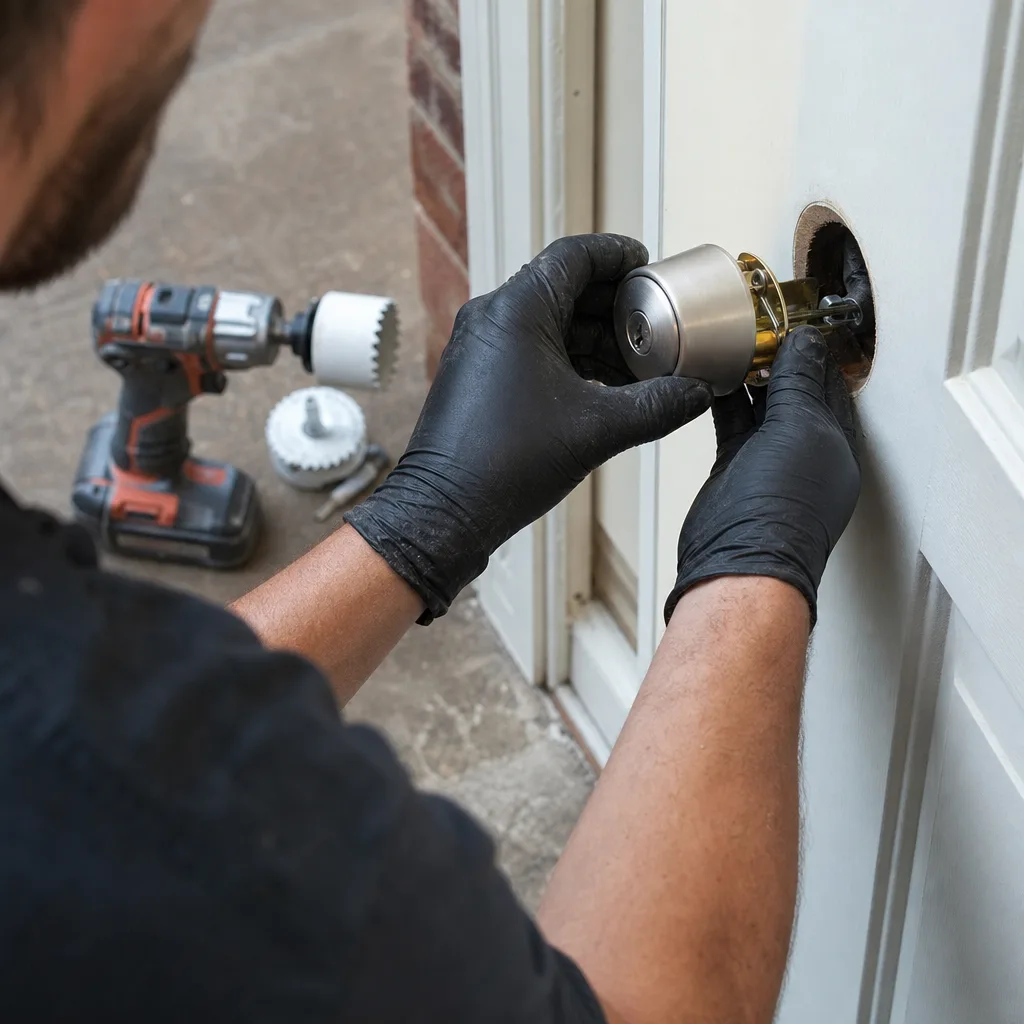
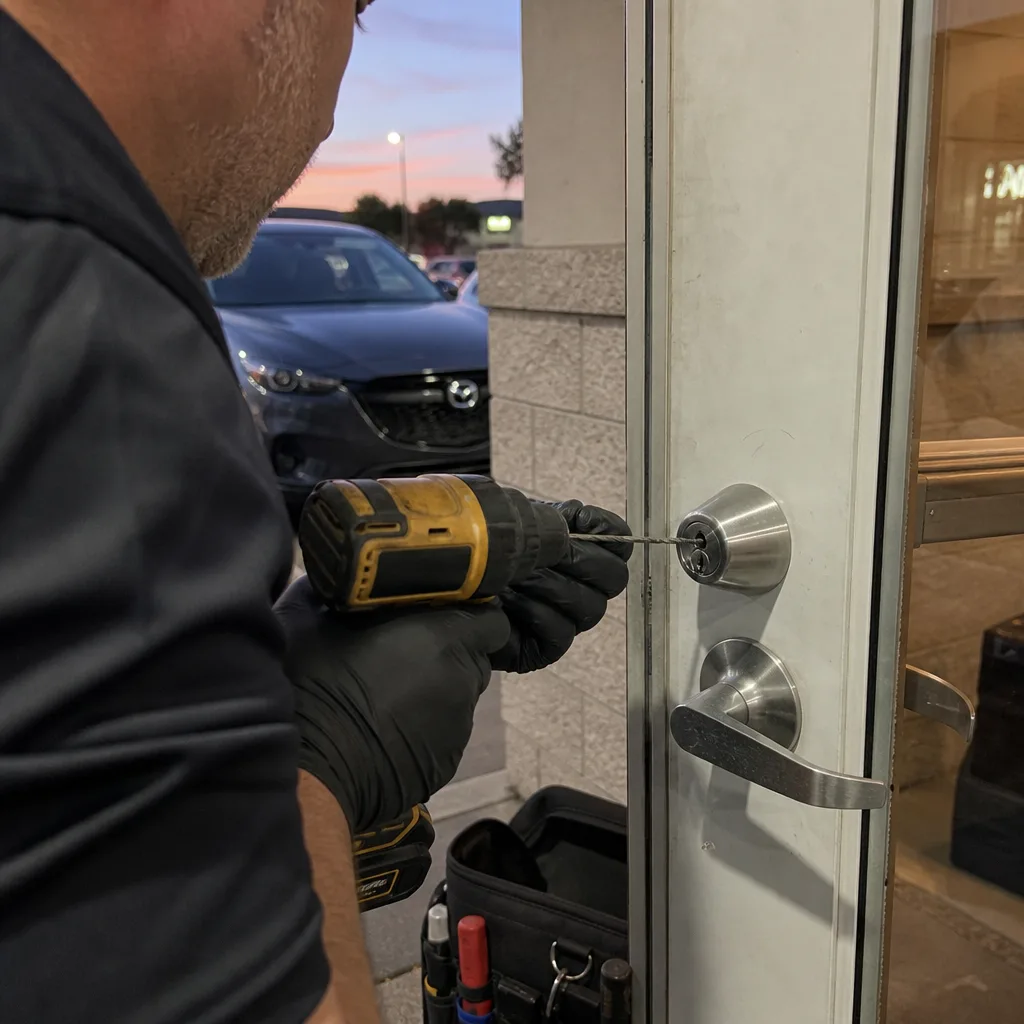
Drilling a lock destroys it. A new lock costs $40-$300 plus installation labor. This is why the “drill only” claim is profitable for dishonest operators, and why you should understand when drilling is genuinely necessary versus when it is used to inflate a simple job.
Legitimate reasons to drill a lock:
- The lock mechanism has failed internally and cannot be manipulated open
- A broken key is lodged in a position that prevents picking or bypass
- The lock is a high-security cylinder (such as Mul-T-Lock or Abloy) that is designed to resist picking and has no practical bypass
- The lock has been vandalized or tampered with to the point that internal components are damaged
Suspicious circumstances where drilling is not necessary:
- A standard residential deadbolt or knob lock on a routine lockout
- A lock that was working normally before you lost the key
- Any claim that “these new locks can’t be picked” applied to a basic Kwikset or entry-grade Schlage
- Drilling performed without first attempting non-destructive entry, or without explaining why non-destructive methods failed
In our experience across Katy, from the older single-cylinder deadbolts in the historic district to the Baldwin and Yale hardware installed in Cinco Ranch and Firethorne, fewer than 5% of residential lockouts require drilling. The percentage is higher for automotive lockouts with certain European models, and for high-security installations where the owner specifically requested pick-resistant cylinders.
A legitimate technician explains what they found, names the specific failure, and offers to show you the damaged components after drilling. They do not present drilling as the default option for a standard lockout. If you hear “I have to drill this” within the first two minutes of arrival, those are the words that should trigger your exit strategy.
Price-Change Mechanics at the Door: The Exact Language Scammers Use

The price change is not random. It follows a script that has been documented in FTC complaints, local news investigations, and our own customer interviews across the Katy area. Understanding the exact language helps you recognize it in real time.
Phase one: the setup. The technician arrives and confirms the original quote. Then they “inspect” the lock for 30-60 seconds and their demeanor shifts. They may shake their head, exhale sharply, or use a tool in a way that produces an alarming sound.
Phase two: the complication. The technician introduces a problem that was not discussed on the phone. Common formulations we’ve heard reported:
- “This is a high-security lock. The price we quoted was for a standard lock.”
- “The lock has been tampered with. I can see tool marks inside.”
- “This is a commercial-grade cylinder. We need to use different tools.”
- “The pins are seized. I’ll need to drill it, and that changes the price.”
- “There’s a second lock mechanism we couldn’t see from the outside.”
Phase three: the urgency. The technician creates pressure to decide immediately. “I need to know now because I have another call” or “I can only hold this price for a few minutes” or “If I have to go back to the shop for parts, the rate goes up.” The goal is to force a decision before you can verify anything.
Phase four: the new number. The revised price is typically 3-5 times the original quote. A $45 lockout becomes $200-$350. A $60 rekey becomes $250-$400. The technician may present this as a “discounted rate” or claim they are “doing you a favor” by not charging more.
The three words that end this script, covered in detail below, are simple: “I’ll call another.” But the moment to use them is before any work begins, while your lock is still intact and your options are open. Once the technician has drilled, removed, or damaged hardware, you have lost leverage.
At Novak Lock & Security, the price quoted by the dispatcher is the price on the invoice. Haven Standard Clause 1 prohibits any technician from changing that price at the door. If we encounter genuinely unexpected conditions, we stop, explain the situation, and quote a revised price in writing before continuing. The customer approves it or we leave. No pressure, no surprise.
How to Use the Texas DPS License Lookup in Real Time
Texas requires every locksmith to hold a Private Security License issued by the Department of Public Safety. The license is not optional, not a formality, and not something that can be verified after the fact if things go wrong. You can use it as a real-time filter during the phone call, before you give your address or agree to any dispatch.
Step 1: Ask for the license number during the call. A legitimate locksmith knows their number and provides it without hesitation. If the dispatcher deflects, says they need to check, or claims the technician carries it, that is a refusal. End the call.
Step 2: Verify the license online. Navigate to the Texas DPS Private Security Bureau license search portal. Enter the license number. The search returns the business name, license status, expiration date, and any disciplinary actions. The process takes under 60 seconds.
Step 3: Confirm the match. The business name on the license must match the business name you called. A common scam tactic is to operate under multiple consumer-facing names while using a single license, or to use a license belonging to a different company entirely. If the names do not match, ask why. If the explanation is evasive, end the call.
Step 4: Check expiration and status. An expired license means the operator is working illegally. A license with recent disciplinary action warrants additional questions. The DPS database shows this information explicitly.
Step 5: Request the technician bring the physical license. When the van arrives, ask to see it. A photo ID with the license number, matching the online record, is required. A photocopy, a company badge, or a verbal confirmation is not sufficient.
In Katy, we’ve encountered operators using expired licenses, licenses from other states presented as valid in Texas, and completely fabricated numbers that return no DPS record. The real-time lookup eliminates these variations. It takes less time than the scammer wants you to spend listening to their complication story at your door.
Katy-Specific Risk Factors: New Construction, Older Homes, and HOAs
Katy’s housing stock creates specific conditions that scammers exploit. Understanding them helps you anticipate what a legitimate technician should encounter, and what sounds manufactured.
New construction and recent builds. Developments like Cane Island, Elyson, and Cross Creek Ranch typically install builder-grade Kwikset or entry-level Schlage hardware. These locks are standardized, widely understood, and rarely require drilling for routine service. A technician who claims “this is a special lock we don’t see often” on a 2019-built home in Tamarron is either inexperienced or deceptive. The Residential Locksmith in Katy page details what standard hardware looks like in these properties.
Older homes in Old Katy and surrounding areas. Homes built before 1990 may have original Baldwin, Yale, or other premium hardware that has been in service for decades. These locks can develop genuine internal failures. They can also be serviced by technicians with the right training and tools. A legitimate locksmith recognizes Baldwin and Yale by sight, knows whether parts are still manufactured, and can explain whether repair or replacement makes sense. A scammer sees an opportunity to drill and sell whatever they carry in the van.
HOA requirements. Many Katy neighborhoods, particularly in master-planned communities, specify hardware finishes, styles, or even brands in their covenants. A legitimate locksmith asks about HOA requirements before replacing hardware. A scammer installs whatever they have, leaving you with a lock that violates your covenant and requires replacement.
Climate factors. Katy’s humidity and occasional flooding affect lock hardware. Exterior locks in low-lying areas near Buffalo Bayou tributaries can corrode internally, producing genuine failures that mimic tampering. A trained technician distinguishes corrosion from tool marks. An untrained or dishonest one uses any visible wear to justify drilling.
For commercial properties along I-10 and the Grand Parkway corridor, Commercial Locksmith in Katy services address the different hardware grades and access requirements that apply to business installations.
The Three Words That End Most Scams
The FTC has documented the locksmith scam script since 2007. It still works because homeowners feel pressured, embarrassed, or uncertain at their own front door. The script depends on your reluctance to stop the interaction once it has begun.
The three words are: “I’ll call another.”
Not “Let me think about it.” Not “That’s more than I expected.” Not “Can you give me a minute?” These responses invite negotiation, which is what the scammer is trained to handle. They have counter-arguments for hesitation. They do not have a counter-argument for a terminated transaction.
Say it clearly. “I’ll call another locksmith.” Then close the door or step back inside. If you are locked out and cannot re-enter, step away from the door, call a friend or neighbor, and wait elsewhere. The scammer’s leverage is your physical presence at the lock they control. Remove that presence and the leverage disappears.
If the technician becomes insistent, aggressive, or refuses to leave, this is no longer a pricing dispute. It is a safety concern. Call the Katy Police Department non-emergency line or 911 if you feel threatened. Document the vehicle, the person’s description, and any business name they provided. Report the incident to the Texas DPS Private Security Bureau.
The three words work because they are final. They do not require explanation or justification. You are not obligated to accept service from anyone who arrives at your door, regardless of what was said on the phone. The power to end the interaction is yours, and it is most effective before any work begins.
What a Legitimate Service Call Looks Like From Start to Finish
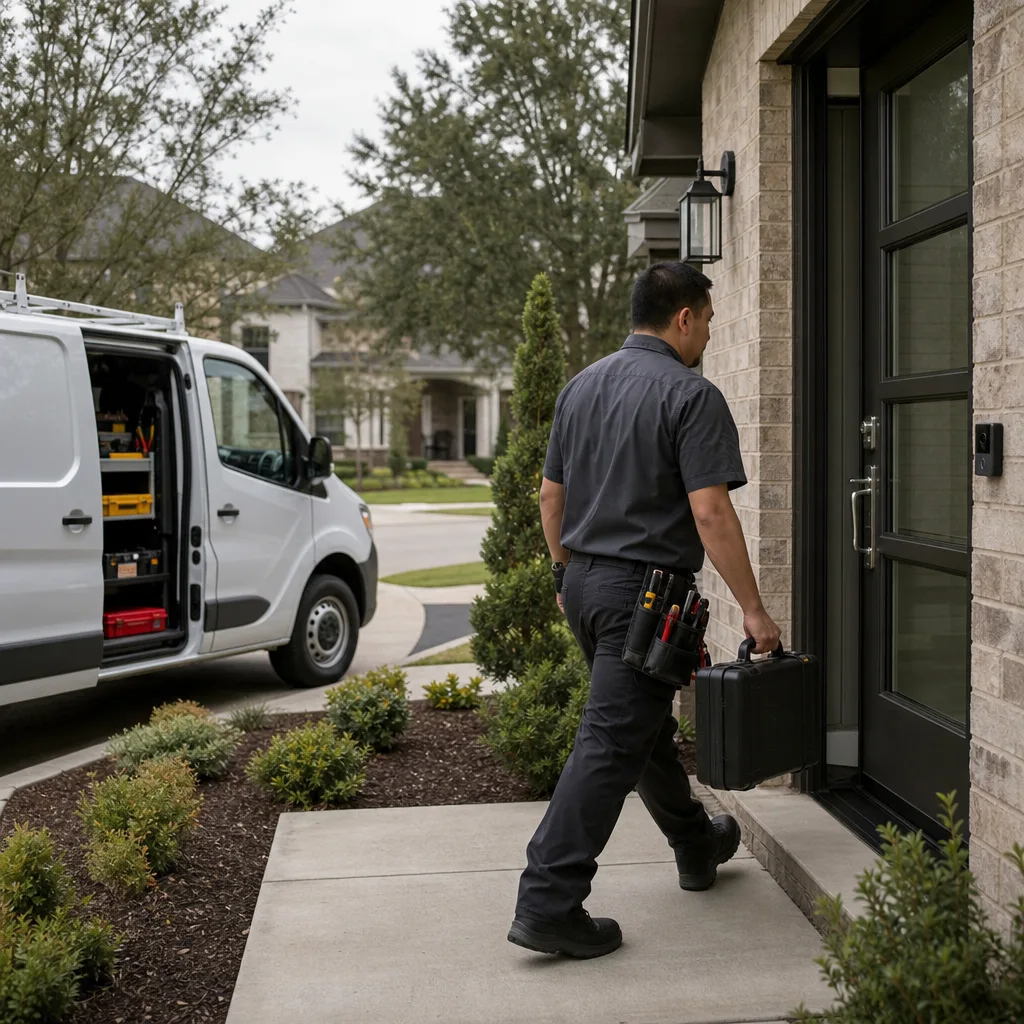
Understanding the warning signs is defensive. Understanding what legitimate service looks like is offensive: it lets you demand the standard you deserve and recognize when you are receiving it. Explore more guides & resources to stay informed.
The phone call. A live person answers. They ask detailed questions about your situation. They quote a firm price or narrow range, explain what it includes, and confirm it in writing before dispatch. At Novak Lock & Security, calls are answered by a live person 24/7, not a voicemail queue or callback system.
Dispatch and arrival. The technician arrives in a marked vehicle, within the timeframe quoted. They present their Texas DPS license on request. They wear a uniform and carry identification that matches the business name on the van and the invoice.
Assessment. The technician examines the lock, explains what they find, and describes the options before doing any work that changes the price. If drilling is necessary, they explain why, show you the specific failure, and quote the total cost including replacement hardware. You approve it in writing or they stop.
Work and documentation. The technician performs the work, tests the result, and explains what was done. They take a documented photo record of the completed work, which is included as standard. The invoice matches the quoted price, itemizes labor and parts, and includes the business name, address, license number, and warranty terms.
Follow-up. The work is backed by a written warranty. At Novak Lock & Security, the 365-Day Done Right Promise applies to every lock installation, rekey, and emergency call. If it’s not done right, we make it right. The documented photo record and written invoice provide the traceability to honor that promise.
For properties requiring electronic access management, Access Control Systems in Katy covers the survey, specification, and installation process for commercial-grade entry systems.
Common Mistakes to Avoid
- Searching “locksmith near me” and calling the first result with a low price. Scammers dominate paid search with multiple shell listings. In Katy, we’ve seen the same unlicensed operator appear under five different business names. Scroll past the ads, verify the license, and check for a physical address in the area.
- Accepting a verbal quote as sufficient. A legitimate locksmith puts the price in writing before dispatch. A verbal quote with no follow-up document is not a commitment; it is a placeholder designed to get a technician on-site.
- Allowing work to begin before confirming the price. Once the lock is drilled, removed, or disassembled, your negotiating position is gone. Confirm the total price, in writing, before any irreversible work starts.
- Not verifying the technician’s license at the door. The Texas DPS license is your proof that the person has passed a background check and is regulated. A refusal to show it is a red flag that overrides any explanation.
- Paying cash without receiving a detailed invoice. Cash payments with generic receipts or no receipt eliminate your paper trail. Insist on an itemized invoice with the business name, license number, and description of work performed.
- Assuming a local phone number means a local business. Scammers use forwarding numbers with Katy area codes while dispatching from Houston or beyond. Ask for the physical address and verify it matches the DPS license record.
- Waiting until an emergency to find a locksmith. The worst time to evaluate a service provider is when you are locked out in a thunderstorm. Save the contact information of a verified, licensed locksmith now, before you need it.
When to Call a Professional
Call a licensed locksmith when you are locked out of your home, vehicle, or business; when you need locks rekeyed after moving, a relationship change, or lost keys; when a lock is malfunctioning, sticking, or showing visible damage; or when you want to upgrade security with high-security cylinders, smart locks, or access control systems.
Novak Lock & Security Katy offers free estimates in Katy. Call (832) 402-8386 to speak with a live dispatcher, receive a firm written quote, and schedule service with a background-checked, uniformed technician. Every job starts with a written price and ends with a documented record. Since 2002, we’ve installed or serviced over 60,000 locks, keys, and systems, each with the same procedure.
Frequently Asked Questions
A standard residential lockout in Katy typically runs $85-$150 depending on time and location. Rekeying runs $25-$45 per cylinder plus trip charge. Lock installation ranges $75-$250 per lock depending on grade and complexity. Novak Lock & Security quotes a firm price before dispatch, and that price is contractually the price on the invoice. Call (832) 402-8386 for an exact quote on your specific situation.
At Novak Lock & Security, yes. Haven Standard Clause 1 prohibits any technician from changing the quoted price at the door. If genuinely unexpected conditions arise, we stop, explain in writing, and require your approval before continuing. The price on the phone is the price on the invoice, with no exceptions since 2002.
Ask for their Texas DPS Private Security License number during the call, then verify it on the DPS license search portal before giving your address. When the technician arrives, ask to see the physical license. The name and number must match the online record. If they refuse or deflect, end the interaction.
In most cases, yes. Standard residential deadbolts and knob locks can be picked or bypassed non-destructively by a trained technician. Drilling is necessary only when the lock has internal failure, a broken key cannot be extracted, or the lock is specifically designed to resist picking. In our experience across Katy, fewer than 5% of residential lockouts require drilling.
Do not authorize any work. State clearly, “I’ll call another,” and end the interaction. If you cannot re-enter your home, step away and call someone you trust. Do not allow drilling or lock removal under pressure. Report the incident to Texas DPS and, if the technician becomes aggressive, to the Katy Police Department.
Many Katy master-planned communities specify hardware style, finish, or brand in their covenants. A legitimate locksmith asks about HOA requirements before replacing exterior hardware. Installing non-compliant locks can result in fines or mandatory replacement. We verify HOA specifications as part of our standard assessment in covenant-controlled neighborhoods.
The Bottom Line
Locksmith fraud is not sophisticated. It is a repeated script that works because homeowners do not know the pattern. The warning signs are visible at every stage: the too-low phone quote, the unmarked van, the missing license, the sudden complication, the pressure to decide. Each sign is a decision point where you can end the interaction before losing money or security.
The protection is equally simple. Verify the Texas DPS license in real time. Demand a written price before dispatch. Confirm the three markers at the door: marked vehicle, presented license, matching invoice. And remember the three words that override every pressure tactic: “I’ll call another.”
Since 2002, Novak Lock & Security has operated under one rule: the price quoted is the price paid, documented in writing every time. No exceptions, no surprises, no drilling unless it is genuinely necessary and approved by you first. In a trade where trust is the only currency, we have chosen to make ours verifiable.
Written by Daniel Novak, Owner at Novak Lock & Security Katy, serving Katy since 2002.