
Last updated September 25, 2026
Non-destructive entry first, always - and we re-key Schlage, Kwikset, and Baldwin locks on the spot while you watch
You get a price before we start. It does not change when we arrive. No surprises.
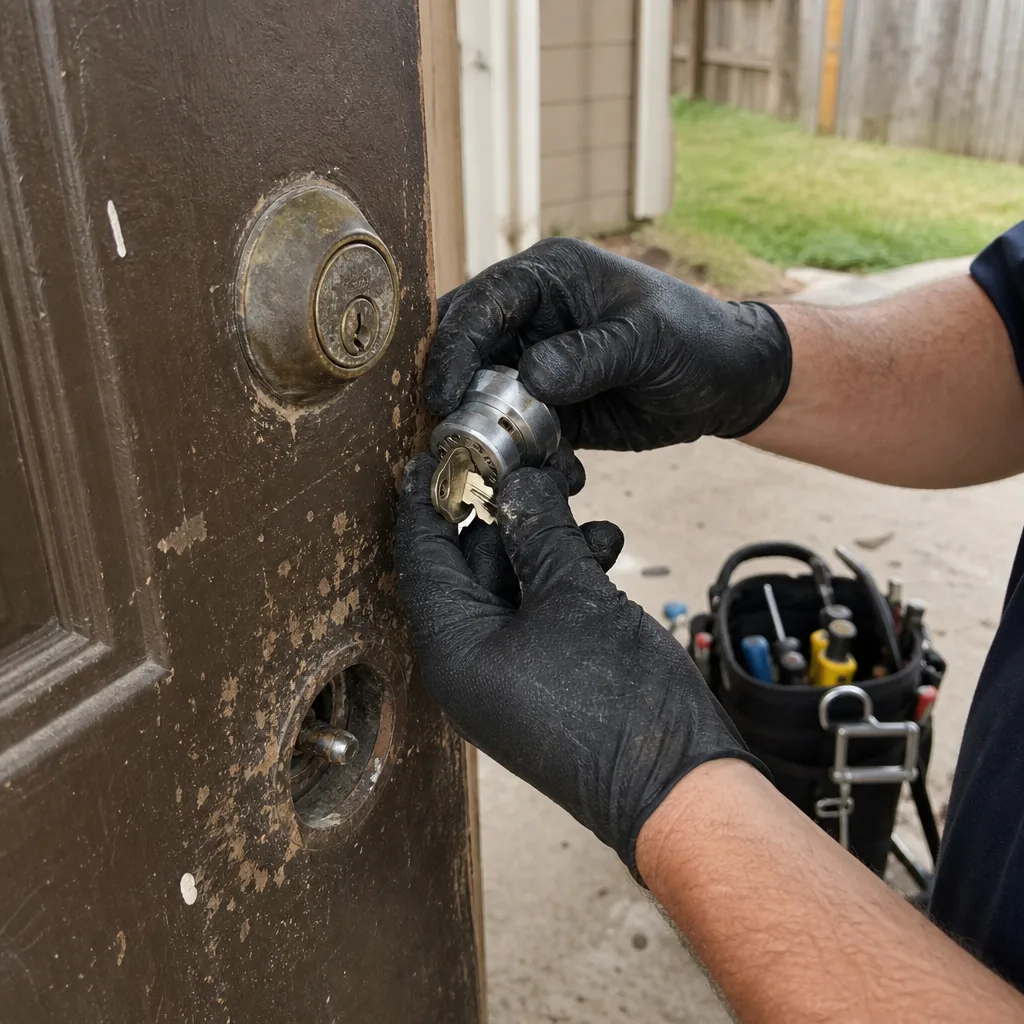 Before
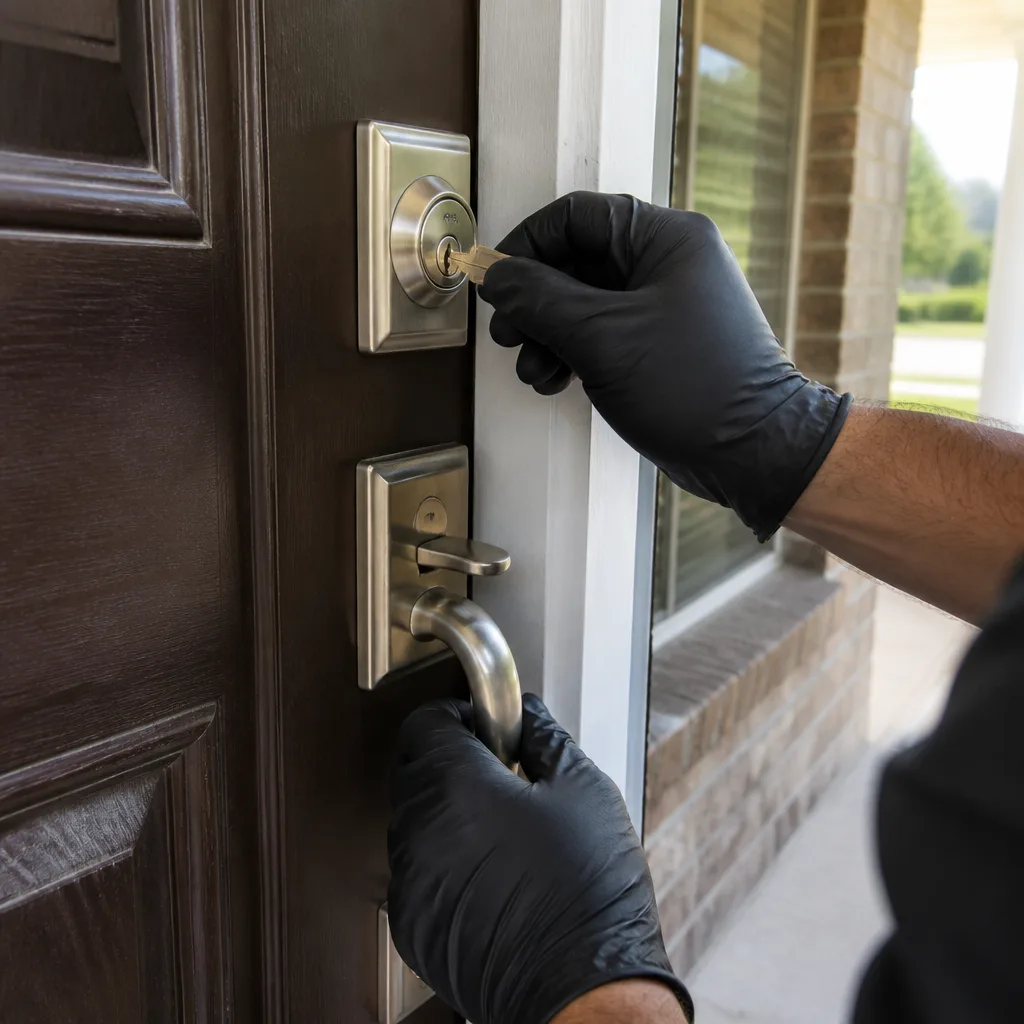 After
AfterCommercial Locksmith Maintenance Checklist for Katy Homeowners
The title says “homeowners,” but the locks we’re talking about are on steel-framed doors in Katy retail strips, office parks off I-10, and light-industrial corridors near Mason Road. If you own or lease commercial space in Katy, you likely don’t have a written inspection record for your door hardware or a relationship with our Commercial Locksmith services. That’s the gap this checklist closes. Most commercial lock failures we see in Katy aren’t sudden - they broadcast warning signs for months. Almost no one writes them down.
Quick Answer
A commercial locksmith maintenance checklist for Katy properties covers monthly visual inspections of latches and strikes, quarterly lubrication and torque checks on Grade 1 hardware, semi-annual access control credential audits, and annual full-cylinder inspections for humidity corrosion. For deeper background, see The Complete Guide to Locksmith in Katy. High-traffic retail doors need inspection every 90 days; back-office suites can run on a 6-month cycle. Document everything - a written maintenance record is often required for commercial insurance claims after a break-in or lockout incident.
Table of Contents

- Door-Grade vs. Lock-Grade Standards for Commercial Applications
- Katy Climate Inspection Points: Humidity, Thermal Expansion, UV
- Monthly and Quarterly Maintenance Checklist
- Access Control Audit Checklist for Employee Turnover
- What Maintenance Records Do for Liability Claims
- Scheduling Cadence by Business Type
- Common Mistakes to Avoid
- When to Call a Professional
- Frequently Asked Questions
BeforeAfterDoor-Grade vs. Lock-Grade Standards for Commercial Applications
Here’s the standard that voids more Katy business insurance policies than any other: a residential-rated deadbolt installed on a commercial door. We’ve found this exact mismatch in medical offices near Katy Mills, restaurants in LaCenterra, and warehouse suites in the Grand Parkway corridor. The policy doesn’t pay because the hardware never met the occupancy code to begin with.
The distinction is straightforward once you know the vocabulary. ANSI/BHMA grades (the American National Standards Institute / Builders Hardware Manufacturers Association classification) rate locks on cycle testing, strike impact resistance, and forced-entry resistance. Grade 1 handles 1 million cycles. Grade 2 handles 400,000. Grade 3, the residential standard, handles 200,000 and lacks the strike reinforcement that commercial doors require. Most Katy business policies specify Grade 1 or Grade 2 for all public-entry and after-hours access points.
But the lock grade is only half the equation. The door grade matters too. A hollow-metal commercial door with a reinforced strike pocket is designed to transfer forced-entry stress to the frame. Install a Grade 1 mortise lock on a residential wood-core door and the door splits before the lock fails. Install a Grade 3 deadbolt on a 20-gauge steel commercial door and the bolt tears through the soft strike plate.
What we document on every commercial survey in Katy:
- Door material and gauge: 18-gauge hollow metal, aluminum stile, or wood-core with steel veneer
- Frame type: Welded steel, knock-down, or aluminum thermal-break
- Lock grade and function: Entry, storeroom, classroom, or electrified function
- Strike reinforcement: Standard, heavy-duty, or security box strike with 3-inch screws into framing
- Fire rating: 20-minute, 45-minute, 90-minute, or none - this determines hardware options
A restaurant owner on Mason Road called us last year after a break-in. The insurer denied the claim because the rear door had a Kwikset SmartKey deadbolt - Grade 3 residential hardware - on a fire-rated steel door. The policy required Grade 1. The gap between what was installed and what was covered cost him the full deductible plus out-of-pocket replacement. We replaced the hardware with a Schlage ALX Series Grade 1 mortise lock, documented the grade certification, and added the record to his maintenance file.
The Haven Standard Clause 4 requires us to photograph the existing hardware grade before any work starts and to flag insurance-grade mismatches in writing. If you’re unsure what’s on your doors, that’s the first item for your checklist.
Katy Climate Inspection Points: Humidity, Thermal Expansion, UV
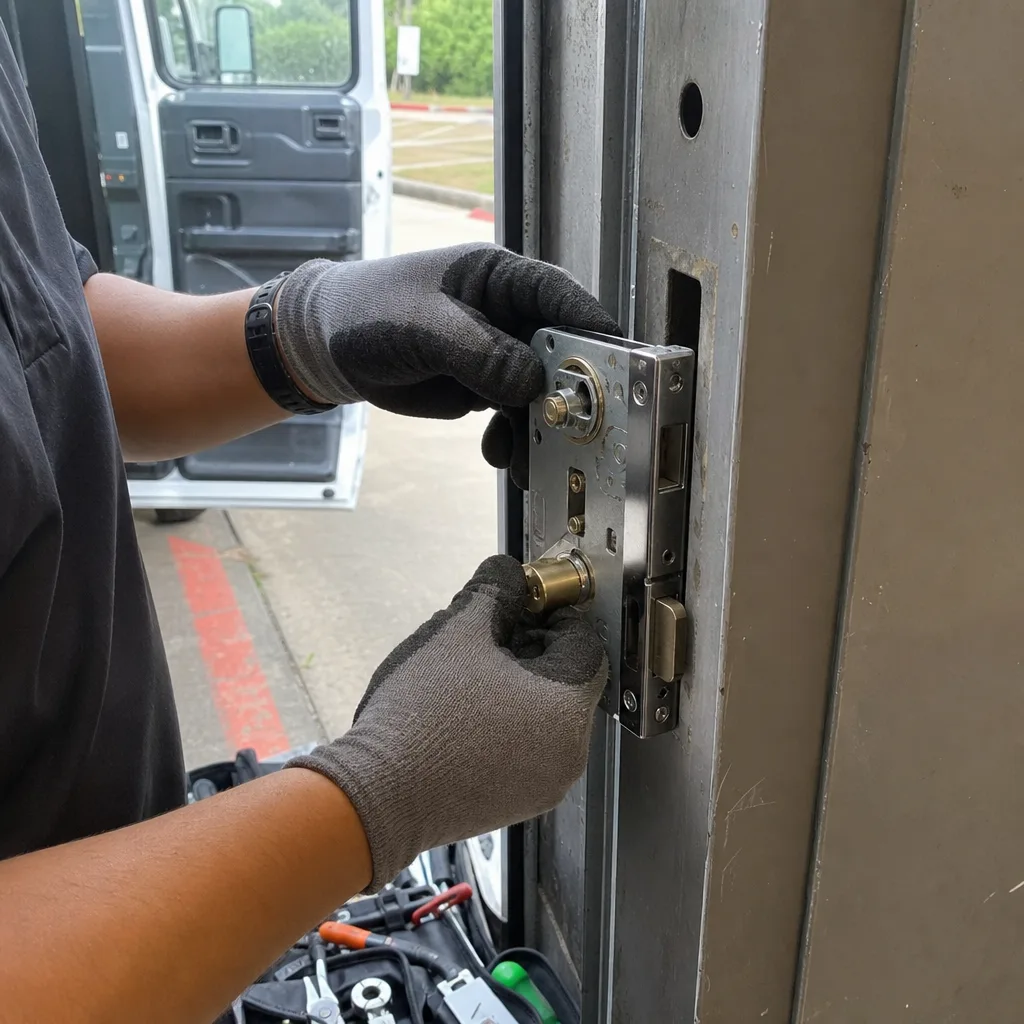
Katy sits in a subtropical humidity zone with summer dew points that stay above 70 degrees for weeks at a time. That moisture doesn’t stay outside. It condenses in lock cylinders, swells wood door edges, and accelerates galvanic corrosion between dissimilar metals in aluminum door frames. We’ve replaced cylinders in Cinco Ranch office suites that were internally corroded after three summers, the keyway so rough that keys hung up halfway in.
Three climate-specific inspection points belong on every Katy commercial checklist:
Humidity-Driven Cylinder Corrosion
Pin-tumbler cylinders in exterior doors collect moisture at the keyway mouth, especially on north-facing entries where sun never hits the escutcheon. The pins oxidize. The springs lose temper. Eventually the key turns with a gritty catch, or won’t turn at all. We see this most in spring and fall when temperature swings drive condensation cycles.
What to check: Insert the key slowly. Feel for grit or variation in resistance. Remove it and inspect the blade for orange-brown residue. If you find either, the cylinder needs removal, cleaning, and lubrication with a dry graphite or Teflon-based product - never oil, which traps moisture. For high-traffic doors, we recommend pulling the cylinder annually for internal inspection. In Katy’s climate, that’s not conservative; it’s standard.
Thermal Expansion in Aluminum Door Frames
Aluminum storefront systems, common in Katy retail strips from Fry Road to Franz Road, expand roughly twice as much as steel per degree of temperature change. A 10-foot aluminum header can grow 1/8 inch between a 45-degree January morning and a 95-degree August afternoon. That movement shifts the lock strike alignment. The latch misses the strike. The door won’t latch without being lifted or shoved.
What to check: Close the door normally. Does the latch enter the strike without pressure? Open the door 6 inches and release it. Does the latch engage, or does the door bounce? Misalignment from thermal cycling often shows as wear marks on the strike lip or latch bolt. If you see scoring or a polished wear path, the frame has shifted. The fix is strike adjustment or, in severe cases, frame realignment. Ignoring it leads to latch failure and, in fire-rated assemblies, code violation.
UV Degradation on Keypad Housings
Electronic access control keypads and card readers mounted on south or west exposures in Katy take direct Texas sun for 6 to 8 hours daily. Polycarbonate housings chalk and craze. Rubber membrane buttons harden and crack. We’ve pulled keypads from Katy auto-service centers where the digits were illegible and the internal seal had failed, letting rainwater reach the circuit board.
What to check: Photograph the keypad monthly. Compare for color change, surface cracking, or button deformation. Test every button for tactile response. If any feel mushy or require double-pressing, the membrane is degrading. For access control systems in Katy, we specify UV-stabilized housings or surface-mounted boxes with sun shields for exposed locations. Replacement before failure is cheaper than an after-hours lockout call.
Monthly and Quarterly Maintenance Checklist
This is the operational core. Print it, assign it, date it, keep it in a file that doesn’t depend on any one employee’s memory.
Monthly Visual Inspection (15 minutes per door)
- Latch engagement: Close the door from normal walking speed. Listen for the click. Visually confirm the latch is fully seated in the strike, not riding on the lip.
- Door closer function: The door should latch before the back-check engages. If it slams or drifts open, the closer needs adjustment. A door that doesn’t latch is a door that isn’t locked.
- Hardware fasteners: Check visible screws on plates, levers, and closers. If any are loose, tighten and note which ones - repeated loosening indicates stripped holes or frame movement.
- Keyway condition: Shine a light into the cylinder. Look for debris, corrosion, or liquid sheen. Note any key that hangs or catches.
- Exit device function (if equipped): Press the push bar. The latch should retract smoothly and re-engage when released. The alarm, if present, should sound immediately.
Quarterly Mechanical Service (30-45 minutes per door)
- Cylinder removal and inspection: Pull the cylinder per manufacturer procedure. Inspect pins for corrosion or wear. Lubricate with dry graphite. Reinstall and test with 3 keys.
- Strike adjustment: Check alignment with the door at both summer and winter frame positions. File or shim the strike for clean engagement. Confirm 3-inch screws anchor to framing, not just jamb material.
- Hinge torque and pin condition: Tighten all screws. If a door sags, check for bent pins or stripped hinge barrels. Sagging causes latch misalignment and accelerated wear.
- Door closer oil leak: Any fluid on the closer body or floor indicates seal failure. The closer will lose speed control and eventually stop functioning. Replace - closer repair is rarely economical.
- Weatherstrip and sweep: Gaps over 1/8 inch at the door bottom or sides allow direct moisture and dust contact with hardware. Replace worn seals.
For businesses with multiple locations in Katy, we recommend a single standardized checklist across all properties. A property manager with seven retail suites in the Grand Parkway corridor uses our template with a dated signature line for each inspection. When she had a liability inquiry last year, she produced 18 months of records. The opposing party dropped the claim.
Access Control Audit Checklist for Employee Turnover
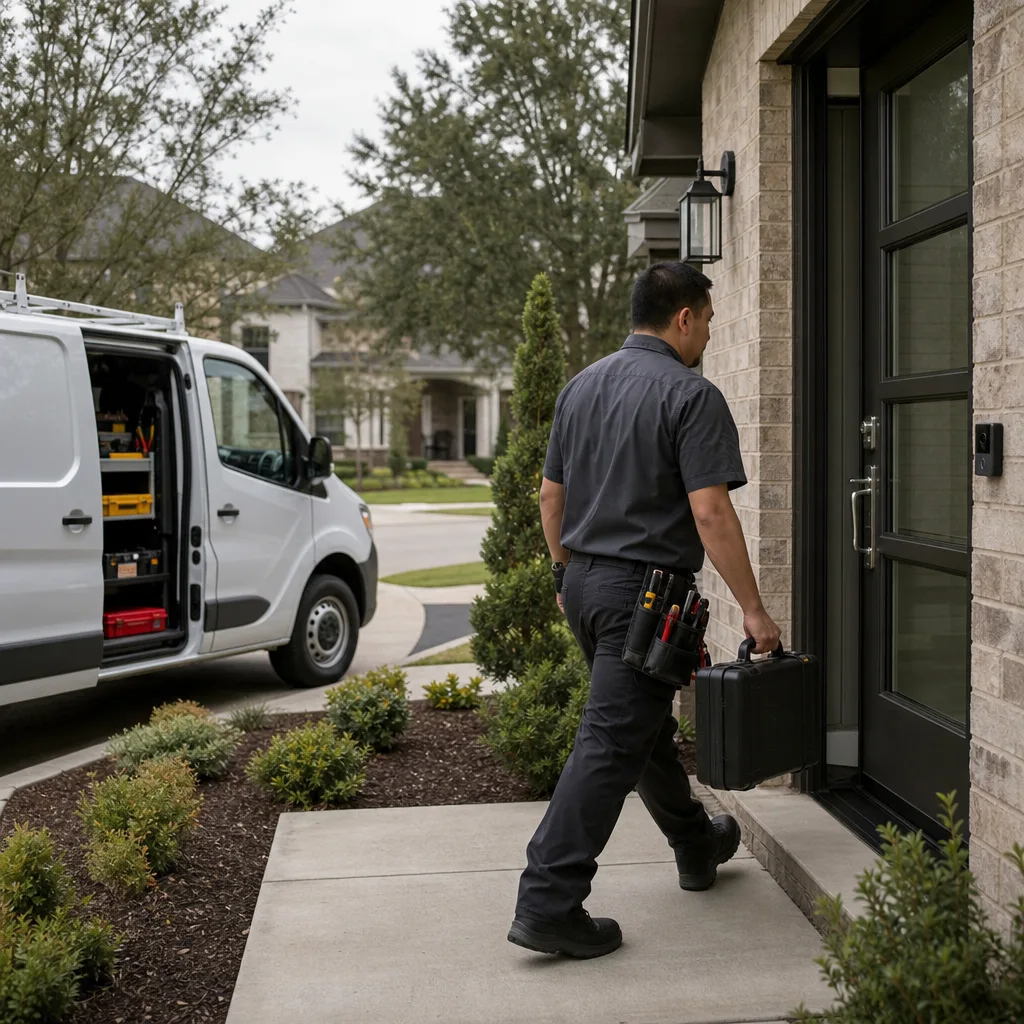
Katy’s business growth means employee turnover, and turnover means credential management. Most businesses we audit have active credentials for employees who left months ago. The average is 4 to 6 orphaned credentials per location. Each one is an undated, unrevoked key to the building.
The decision tree is simple in theory, expensive if you get it wrong:
- Rekey: Change the keying of existing cylinders so old keys no longer operate. Cost-effective for small staff, infrequent turnover, or when you need the change today. Typical range in Katy: $18-$32 per cylinder, quoted in writing before we start.
- Master-key system: Install a hierarchical keying structure where each employee has a key that opens only their doors, supervisors have keys that open more, and the owner has a key that opens all. Cost-effective at 8+ doors or with regular turnover. Eliminates full rekeying when one employee leaves.
- Electronic access control: Replace mechanical credentials with cards, fobs, or mobile credentials that can be revoked remotely, with audit trails of who entered when. Cost-effective for 15+ users, multiple shifts, or compliance requirements.
Our access control audit for Katy businesses follows this sequence:
- Credential inventory: List every key, card, fob, or mobile credential issued. Match to current employees. Flag any unmatched credential.
- Door access matrix: Document who can enter which doors, when. Most businesses have never written this down. The exercise alone reveals gaps - the bookkeeper with a key to the server closet, the delivery driver with after-hours access to the office suite.
- Revocation protocol: Define the timeline and method for credential termination. Same-day for involuntary separation; end-of-day for voluntary. Assign responsibility.
- Audit schedule: Run the full inventory quarterly. For electronic systems, pull the access log monthly and review anomalies - entries outside business hours, repeated failed attempts, tailgating events.
- Upgrade threshold: If quarterly rekeying costs exceed 40% of a master-key or electronic system over two years, present the upgrade option in writing. Haven Standard Clause 7 requires us to flag this threshold when we see it.
A medical practice in the Katy area had rekeyed four times in fourteen months due to staff changes. We installed a Schlage Control smart lock system with mobile credentials. Their quarterly audit now takes 10 minutes. Revocation is instant. The photo record of each installation is in their file, dated, with technician signature.
What Maintenance Records Do for Liability Claims
After a break-in or a lockout injury, the first document an insurer or attorney requests is the maintenance history for the door hardware. Most Katy businesses produce nothing. A few produce a receipt from the last time something broke. Almost none have a dated, sequential record of inspections, adjustments, and proactive replacements.
This matters in two specific claim types:
Negligent security claims: A customer or employee is assaulted in a parking lot or stairwell. The plaintiff alleges inadequate lighting, broken locks, or inoperative access control. If your records show monthly inspections, documented repairs, and dated photo evidence of functional hardware, you have a defensible position. If you have no records, the plaintiff’s expert will testify that “industry standard” requires documented maintenance - and your absence of records becomes evidence of deviation from that standard.
Workers’ compensation and lockout injuries: An employee is injured forcing a stuck door, or locked in a cooler because the release mechanism failed. OSHA and the insurer will ask when the hardware was last inspected, who performed the inspection, and what was found. A handwritten note on a calendar doesn’t qualify. A checklist with date, signature, findings, and corrective action does.
What a defensible record contains:
- Date and time of inspection
- Name and signature of inspector
- Door location identifier (building, level, room number)
- Hardware type, brand, and grade
- Condition found for each inspection point
- Corrective action taken, if any, with date completed
- Photo of hardware condition, especially any defect found
Novak Lock & Security Katy provides a standardized inspection template to our commercial accounts, or we perform the inspections directly and add the records to your file. Every visit includes the documented photo record required by The Haven Standard. If you ever need to produce maintenance history, it’s complete and chronological.
Scheduling Cadence by Business Type

Not every door in Katy wears at the same rate. A high-traffic retail entry in Katy Mills sees more cycles in a month than a back-office suite sees in a year. The inspection schedule should match the use pattern.
| Business Type | Primary Door Usage | Recommended Inspection Interval | Key Climate/Use Factor |
|---|---|---|---|
| Retail storefront, high traffic | Customer entry, 200+ cycles/day | Every 90 days | Dust, humidity, frequent abuse |
| Restaurant/bar | Staff entry, delivery access, grease exposure | Every 90 days | Grease accumulation, corrosion, late-hour wear |
| Medical/dental office | Patient entry, HIPAA-secure areas | Every 6 months | Clean chemical exposure, compliance audit needs |
| Professional office suite | Staff entry, occasional client | Every 6 months | Low wear, but HVAC pressure differentials affect latching |
| Light industrial/warehouse | Forklift and pallet jack traffic, loading doors | Every 90 days | Impact damage, thermal cycling, security after hours |
| Multi-tenant retail | Varies by tenant; common area doors | Every 6 months, plus tenant change inspection | Tenant turnover, mixed-use wear patterns |
The 90-day interval for high-traffic doors isn’t arbitrary. At 200 cycles per day, a Grade 1 lock reaches 18,000 cycles in 90 days. That’s 2% of its rated life - the point where early wear patterns become visible to a trained inspector. Catching a failing latch spring at 2% is a $30 adjustment. Missing it until failure is a $200+ emergency call, potential lockout, and possible security gap.
For businesses in Katy’s newer developments - the expansions along the Grand Parkway, the commercial infill in Cane Island - we also recommend a post-construction inspection at 6 months. New buildings settle. Frames shift. Hardware installed on plumb during construction may be out of alignment after the first summer of thermal cycling. We’ve found strike misalignments of 1/4 inch or more in buildings less than a year old.
Common Mistakes to Avoid
- Using residential hardware on commercial doors. It voids insurance, violates code, and fails faster. We’ve replaced Kwikset deadbolts on commercial doors in Katy office parks where the owner “saved money” - then paid for emergency rekeying twice in one year when the hardware failed.
- Oiling lock cylinders. Oil attracts dust and traps moisture in Katy’s humid climate. Use dry graphite or Teflon-based lubricants only. We’ve opened cylinders that were internally caked with a paste of oil, dust, and corrosion.
- Ignoring the door closer. A closer that slams or drifts is not a nuisance - it’s a door that isn’t latching reliably. Unlatched doors are unlocked doors. Adjust or replace closers at the first sign of speed change.
- Rekeying without updating the access log. Every rekey generates new keys. If you don’t record who received which key and when, you’re back to orphaned credentials within months. The log is as important as the rekey.
- Skipping seasonal inspections. Katy’s thermal swing from January to July is 50+ degrees. Hardware aligned in winter may fail in summer. Inspect after the first hot spell and after the first cold snap.
- Letting any employee “fix” the lock. We’ve found screws driven through lock bodies, strike plates bent with hammers, and cylinders glued in place. Amateur repair usually destroys the hardware and voids the warranty. Call for professional service.
- Having no written record at all. This is the most common mistake and the most costly when a claim arises. A maintenance record costs nothing to maintain and everything to reconstruct after the fact.
When to Call a Professional
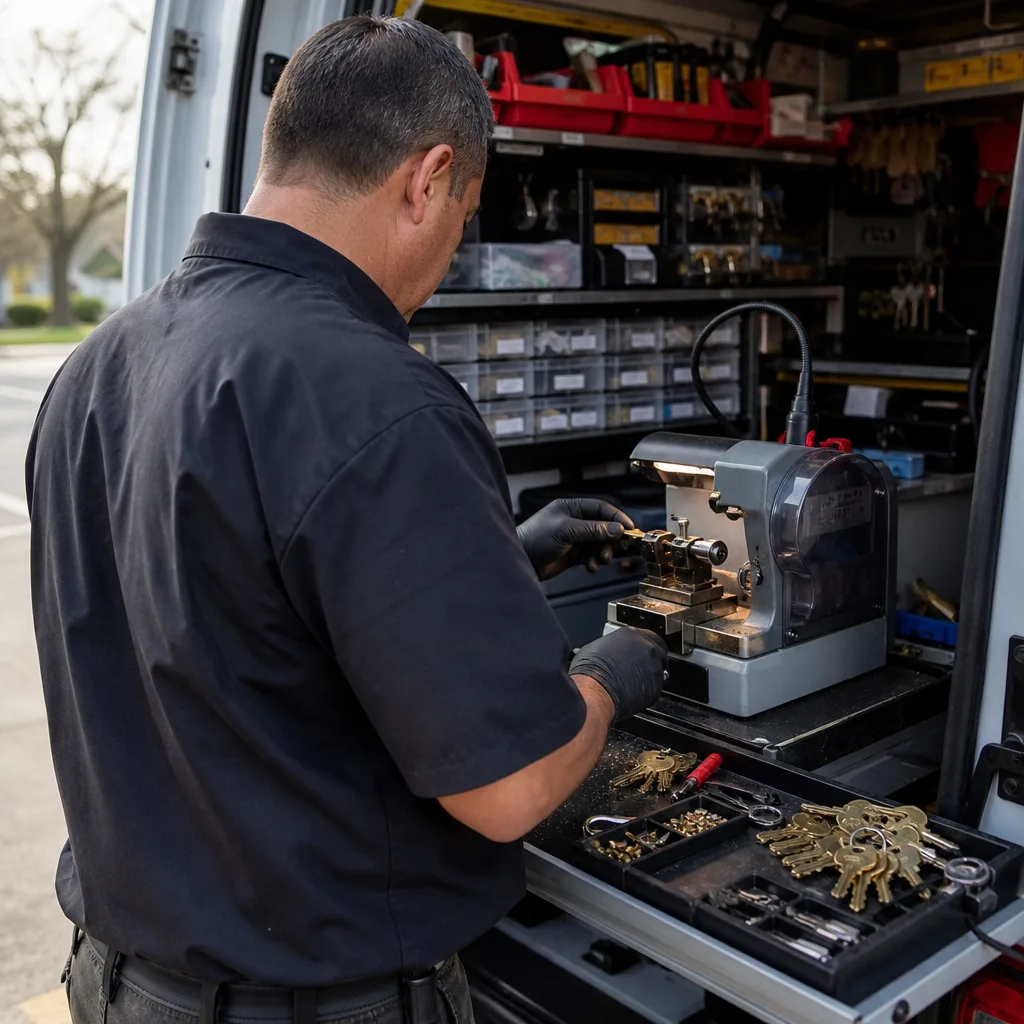
Call when you find corrosion in a cylinder, misalignment that returns after adjustment, any electronic access failure, or when your last inspection record is more than a year old. Call before turnover leaves you with unknown credentials. Call when your insurer asks for hardware grade documentation and you can’t produce it.
Novak Lock & Security Katy offers free estimates for commercial properties in Katy. We’ll survey your hardware, grade it against your insurance requirements, and deliver a written scope and price before any work begins. Call (832) 402-8386.
Frequently Asked Questions
Planned maintenance typically runs $75-$150 per door for a quarterly service visit, including inspection, lubrication, adjustment, and documented photo record. Emergency repairs after failure run $150-$350 plus parts. The scheduled service is cheaper and prevents the emergency. Call (832) 402-8386 for a written estimate on your specific door count and hardware type.
Yes. Haven Standard Clause 1: the price quoted by our dispatcher is the price on the invoice. Our technicians are contractually prohibited from changing it at the door. This rule has been in place since 2002. If we find additional needs during service, we quote them separately and require your approval before proceeding.
Our live dispatch answers calls 24/7 with no automated queue. Emergency response time in the Katy area typically ranges from 20 to 45 minutes depending on traffic and your specific location. For planned maintenance, we schedule at your convenience with a firm arrival window.
Check your policy declarations page for “protective safeguards” or “door hardware” requirements. Most specify ANSI/BHMA Grade 1 or 2 for commercial occupancy. We can survey your hardware, photograph the grade markings, and deliver a written compliance report. If gaps exist, we quote the upgrade in writing before installation.
Rekeying changes the internal pin configuration so old keys no longer operate the existing lock. The hardware stays in place. Replacing removes the entire lock and installs new. Rekeying is faster and costs less - typically $18-$32 per cylinder in Katy. Replace when the hardware is damaged, outdated, or doesn’t meet grade requirements.
Quarterly for electronic systems, with immediate revocation upon any termination. For mechanical master-key systems, audit key holders every 6 months and rekey any tier where keys are unaccounted for. High-turnover businesses in Katy retail and food service should consider upgrading to electronic credentials for instant revocation capability.
The Bottom Line
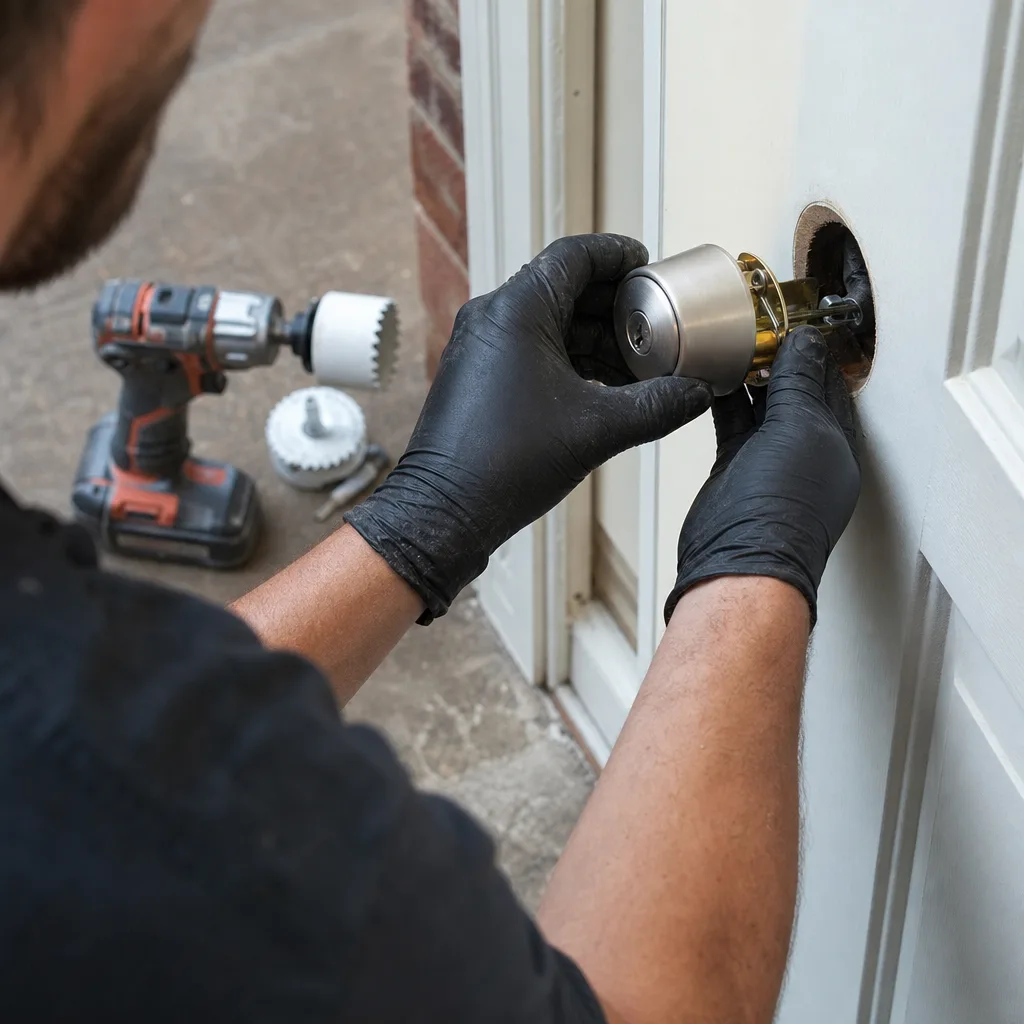
Commercial locks in Katy fail on a schedule you can predict and prevent. The checklist is not complex: inspect monthly, service quarterly, audit access credentials regularly, and keep a written record. The businesses that do this avoid lockouts, maintain insurance compliance, and have defensible documentation if a claim ever arises. The businesses that don’t call us in emergencies, usually at night, usually with no record of what was installed or when it was last checked. For more guides & resources on keeping your property secure, visit our blog. The difference is a checklist and the discipline to use it.
Written by Daniel Novak, Owner at Novak Lock & Security Katy, serving Katy since 2002.